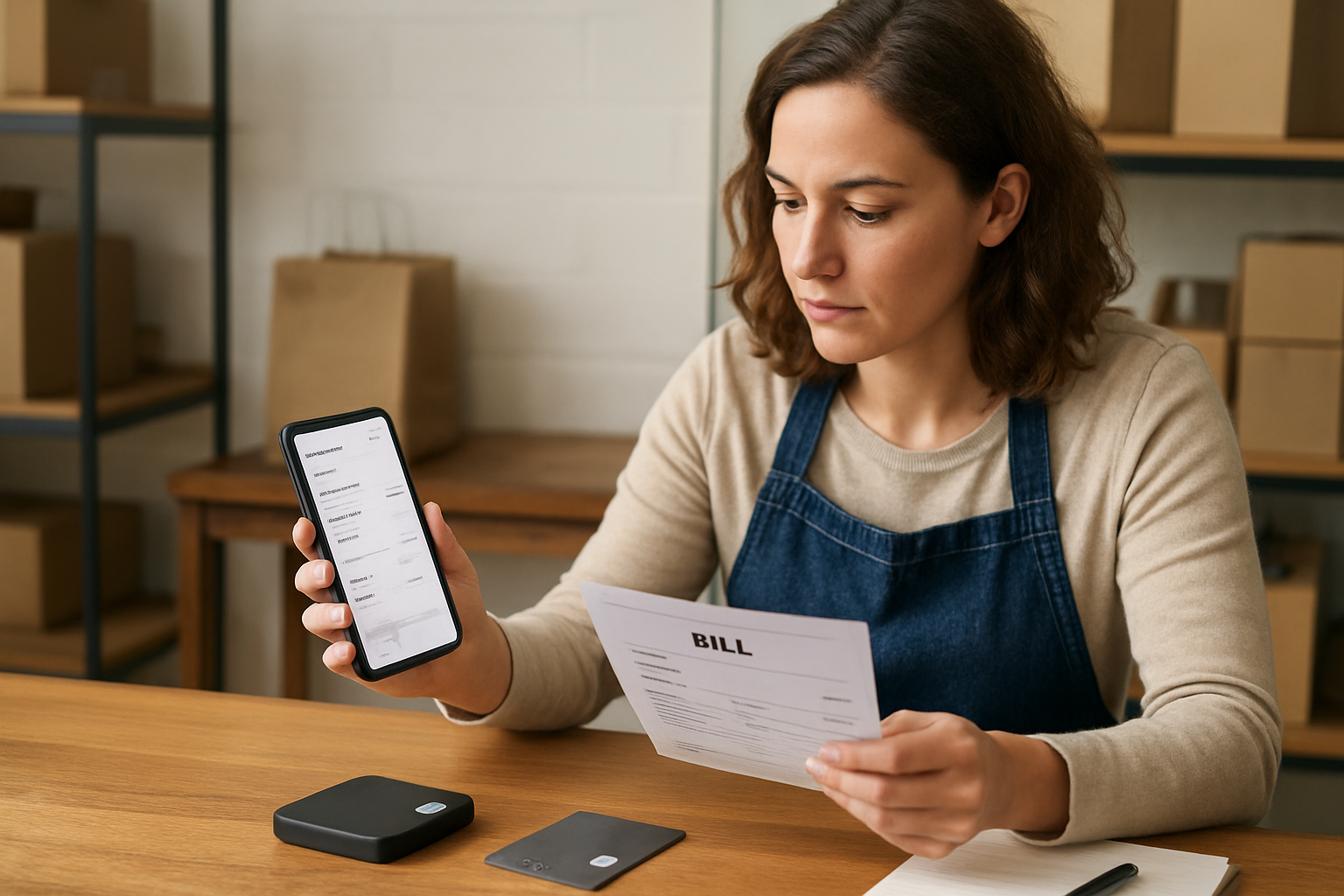
Square’s expanded Bill Pay and refreshed credit card give small businesses a way to float vendor payments, centralize payables, and turn operating spend into rewards.
Why this matters for small businesses
Square’s latest banking update is less about card perks than about cash-flow control. On August 11, 2026, Square said it expanded its Square Credit Card and launched new Square Bill Pay functionality that lets sellers fund vendor payments with the card even when the vendor does not accept cards. Square is positioning the combination as an all-in-one payables and cash-flow tool for small businesses that need to manage the timing gap between bills and receivables.
That timing gap is the practical issue here. Square says uneven cash flow is a common small-business challenge, and it frames the new setup as a way to pay vendors on time while keeping cash longer. For owners who live with lumpy collections, that can matter more than headline APRs or points programs because it changes when money leaves the business.
What Square is offering
The refreshed Square Credit Card runs on the American Express network and offers unlimited 3% cash back on Square Bill Pay transactions and 1.5% cash back on other purchases, according to Square. Rewards can be redeemed as a cash deposit into Square Savings, statement credit, or free processing. Square also says the card has no personal guarantee, no annual fee, no late fees, and no foreign transaction fees, and includes a dynamic credit line that can grow with the business.
Square says Bill Pay has also been broadened beyond Square Checking sellers and is now available to all sellers as a more general accounts-payable solution. The company says sellers can use it to pay a wider range of vendors, including rent, insurance, marketing expenses, and more, even when those vendors do not accept cards. Square routes payments to the vendor by ACH or by check, depending on how the vendor prefers to be paid.
The business utility: float, rewards, and fewer payment workarounds
For a small business, the main value is not travel points. It is the ability to convert vendor bills into card spend, preserve working capital for a little longer, and still earn rewards on operating expenses. Square says the 3% cash back on Bill Pay transactions can cover the fee on those payments, and its support documentation confirms Bill Pay accepts Square Credit Card as a payment method and shows a 2.9% fee for Bill Pay payments funded by a Square Credit Card or external credit card. That fee detail matters because the economics depend on how the reward compares with the cost of using the card.
Square also says the rewards can be redeemed in ways that directly reduce business costs: cash into Square Savings, statement credit, or free processing. For owners already using Square for payments, banking, and credit, that creates a tighter loop between incoming sales and outgoing bills. Square cites a seller example from a trading card shop owner who says the card helps him buy inventory quickly, earn cash back, and automatically pay down the balance from daily sales without disrupting cash flow.
Who is most likely to benefit
The strongest use case is for businesses with uneven collections and recurring vendor bills: retailers, salons, restaurants, agencies, and service firms that need to pay rent, insurance, marketing, inventory, or contractors before customer cash fully lands. Square says the Bill Pay improvements also include faster bill capture via OCR scanning, simplified vendor setup, and new access points across the Dashboard, which should reduce manual work for owners juggling multiple payment methods.
This is also a strategic fit for businesses already inside Square’s ecosystem. Block’s SEC filings describe Square as an SMB commerce ecosystem for payments, analytics, inventory, employee management, financial services, and next-day settlement. In practical terms, Square is trying to keep more of the business stack in one place: sales, banking, credit, and payables. For a small business owner, that can mean less admin, clearer cash visibility, and one fewer reason to stitch together separate tools for bills, cards, and banking.
The opportunity is straightforward: if a business can use the card to pay vendors it could not otherwise charge, and if the reward structure is strong enough after fees, Square’s update can function as a short-term cash-flow bridge rather than just another rewards card. The key is to run the numbers on each bill, because the value depends on the payment fee, the timing benefit, and whether the reward is redeemed in a way that actually lowers operating costs.