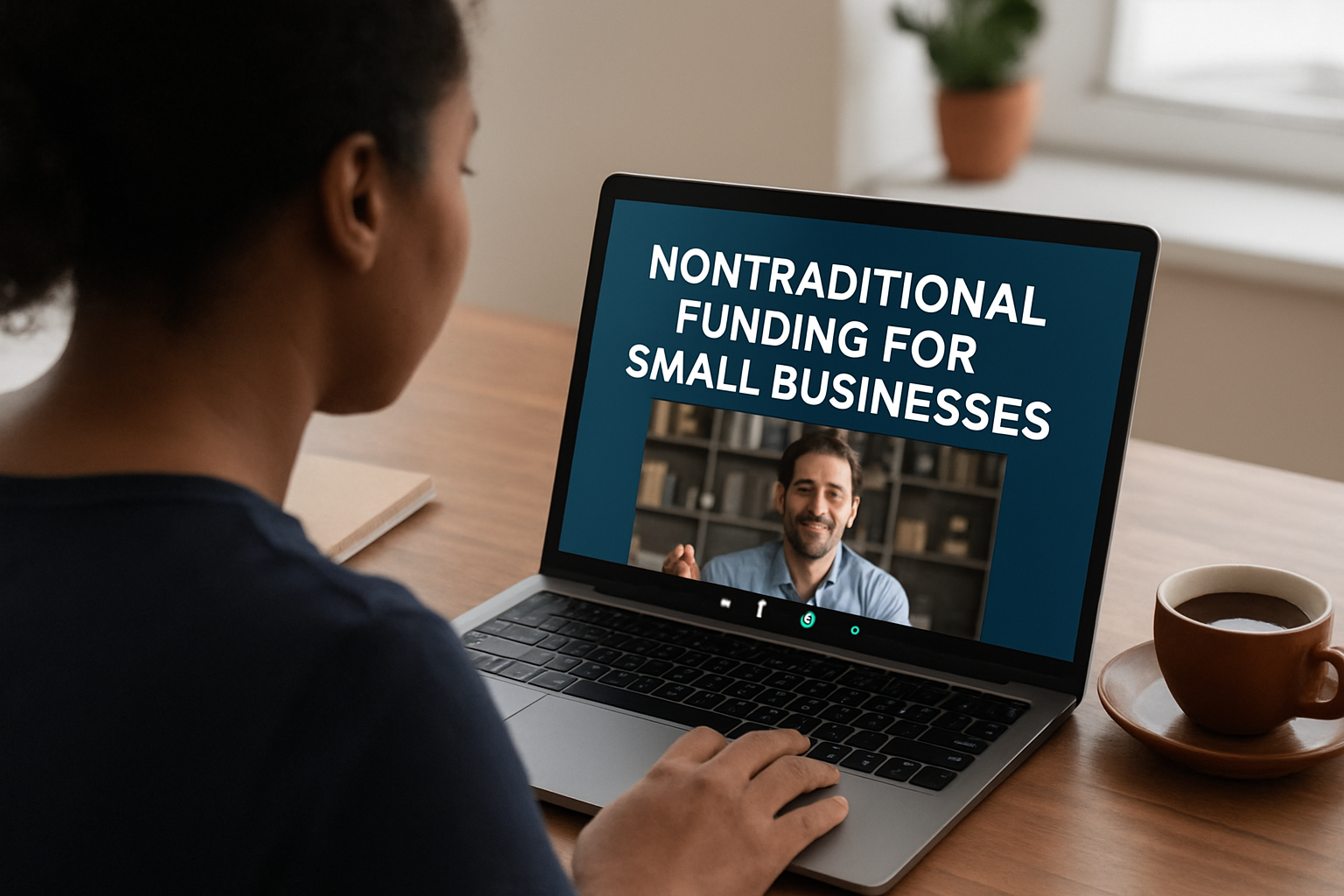
A free online session will cover crowdfunding, revenue-based financing, SBA programs, pitch competitions and community development grants.
Why this webinar matters for small businesses
For owners who cannot get comfortable with a traditional bank loan, SCORE’s free webinar on Alternative Funding for Small Businesses: Grants, Crowdfunding and More is a practical map of other capital routes. The session is scheduled for Thursday, September 10, 2026, from 12:00 to 1:00 p.m. CDT and is listed as an online SCORE Resource Partner event. SCORE says the webinar will explain how crowdfunding, revenue-based financing, SBA programs, pitch competitions and community development grants work, when each may make sense, and how to judge whether a funding option fits a business’s stage, goals and financial needs.
That makes the event useful for entrepreneurs who need money to launch, stabilize cash flow, or fund a next step but do not want to rely only on conventional debt. The value here is not theory: the webinar is framed around how different sources of capital compare with traditional loans and investors, which is the kind of decision-making small businesses need before they spend time on applications, campaigns or competitions.
What the session is set up to cover
According to the event listing, attendees will learn how alternative funding options differ from traditional loans and investors, when crowdfunding or revenue-based financing may make sense, how SBA programs and community development grants can support growth, what to consider before applying for pitch competitions or grants, and how to evaluate which opportunities align with business goals. SCORE’s listing also identifies the event as a free one-hour live online session sponsored by Visa and taught by Dr. Sonia Mitchell.
For BizTipper readers, the practical takeaway is that this is a compact overview of funding paths that can be matched to different business situations. Crowdfunding may be relevant for owners who want to raise capital while building an audience around a product or service, which SBA materials say is a real benefit of crowdfunding. Revenue-based financing may be worth exploring for businesses that want capital tied to future revenue rather than a standard loan structure. SBA programs and community development grants may fit owners looking for public-sector support, while pitch competitions can be a route for businesses willing to trade time and presentation effort for nontraditional capital.
Business use case: choosing the right capital path
The strongest business angle is fit. The webinar’s stated focus on business stage, goals and financial needs suggests a decision framework rather than a one-size-fits-all funding pitch. That matters because the wrong capital source can waste time or create repayment pressure that a small business cannot absorb. A crowdfunding campaign may make sense when the business can also use the campaign to validate demand. Revenue-based financing may be more attractive when cash flow is predictable enough to support repayment tied to sales. Grants and community development programs may be better when the owner can qualify for public or local support without giving up equity.
Because the event is free and online, it is also a low-cost way to gather ideas before pursuing applications or campaigns. SCORE’s separate materials on funding without a loan reinforce the broader point that crowdfunding and grants are legitimate alternatives when debt is not the right fit. For a small business owner, the immediate value is not just learning definitions; it is building a shortlist of funding options that can help raise money, reduce financing risk, or open a path to growth when bank financing is unavailable or unattractive.
Why BizTipper should watch this topic
This webinar is a useful trigger for coverage on nontraditional small-business funding because it bundles several capital sources into one practical session. The most actionable angle for readers is simple: if a business needs funding, the first question is not only how much money is available, but which funding route best matches the business model, timeline and repayment capacity. That is the kind of decision that can save money, avoid costly mistakes and help owners move faster on growth plans.