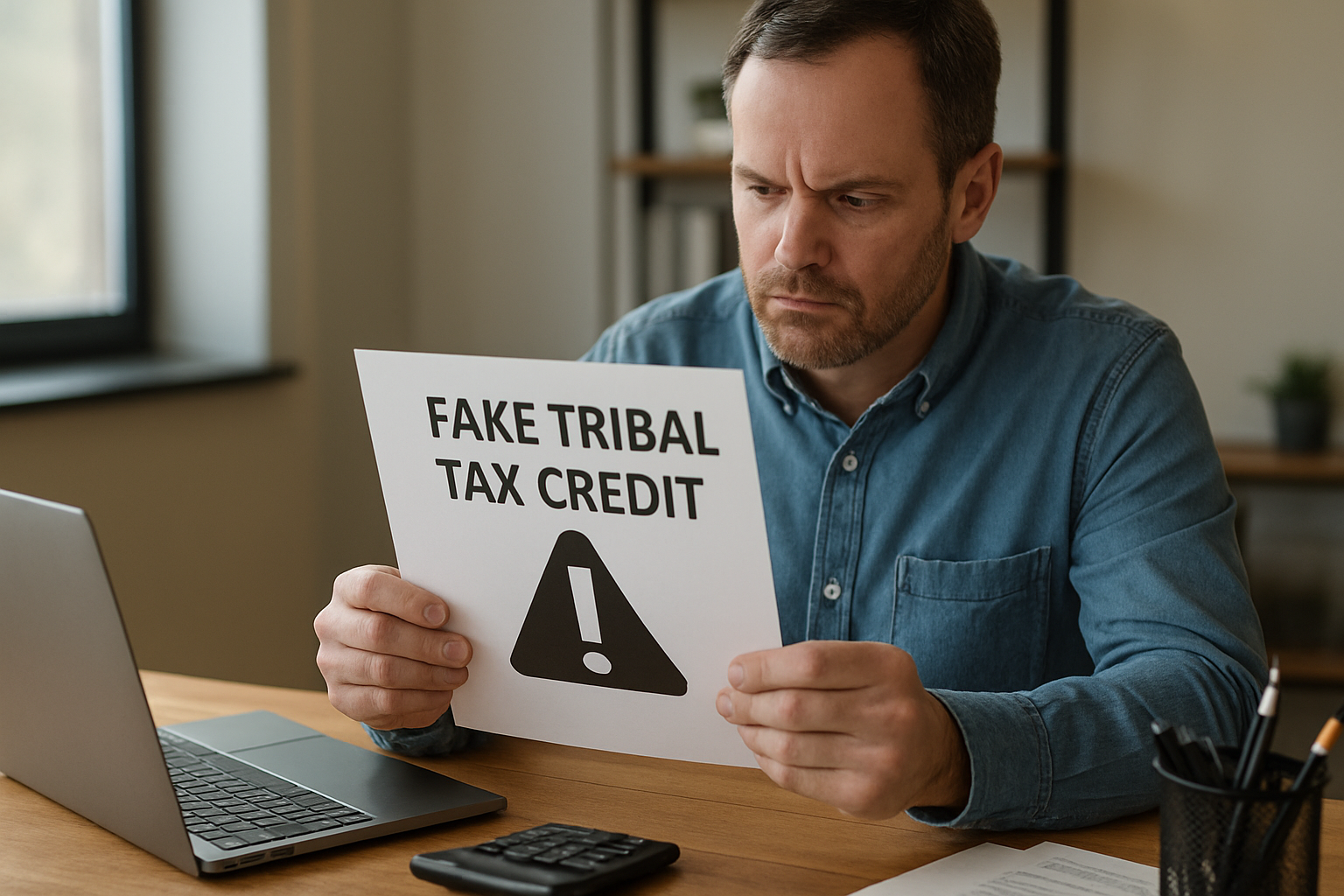
The warning is a fraud-prevention signal for tribal enterprises, tax pros, and small businesses: verify any tax-credit pitch before paying fees or filing returns.
Small businesses, tax preparers, and tribal enterprises should treat any unsolicited pitch for a standalone “Tribal Tax Credit” as a red flag. The IRS said on Sept. 18, 2026 that promoters are selling fake “Tribal Tax Credits” that do not exist under federal law, and it warned taxpayers, tribal communities, businesses, and tax professionals to be cautious.
For BizTipper readers, the practical value is not the tax claim itself but the risk management lesson: bogus credit schemes can drain cash, waste staff time, and expose a business to filing problems if a preparer or consultant pushes a claim that does not hold up. The IRS has also warned that questionable tax schemes can lead to frozen refunds, penalties, and possible criminal prosecution, according to the verified research brief.
Why this matters to small businesses
Any business that works with tribal clients, serves tribal communities, or relies on outside tax help should slow down before signing returns or paying “special access” fees tied to a credit that is not clearly identified in IRS guidance. The IRS warning is especially relevant to small firms that outsource bookkeeping or tax prep, because a bad recommendation can become a costly compliance problem for the owner, not just the preparer.
The research brief says the IRS’s Indian tribal governments page already tracks other abuse patterns, including misrepresentation of tribal status, abusive tax shelters, employment tax irregularities, embezzlement, and improper use of tribal credit cards. That broader pattern suggests this is not a one-off headline; it is part of an ongoing fraud and compliance area where businesses should verify claims carefully before acting.
What to do before you pay or file
The safest response is simple: verify any tax-credit claim against IRS guidance before paying fees, signing a return, or promoting the opportunity to a client. If a promoter cannot point to a clear IRS source, treat the pitch as suspect. The IRS warning specifically says the fake credit does not exist under federal law, which makes independent verification essential.
Tax pros and small-business owners should also be cautious of anyone promising quick cash or inflated refunds. The research brief says the IRS has warned taxpayers to watch for those sales tactics, which are common markers of questionable tax schemes. For a business owner, the cost of being early on a fake credit can be much higher than the cost of waiting for confirmation.
Turn the warning into a business safeguard
This alert can be used as a simple internal control. Add a rule that any new tax credit, refund claim, or “special tribal benefit” must be checked against IRS materials before it reaches the owner, finance lead, or client. That one step can save time, avoid bad filings, and reduce the chance of paying for a scammy tax strategy.
For firms serving tribal clients, the opportunity is to build trust by becoming the safer option. Clear verification procedures, documented source checks, and conservative advice can help a preparer or consultant win customers who want compliance, not hype. In a market where fake credits are being sold, the business that protects clients from fraud can stand out for the right reason.