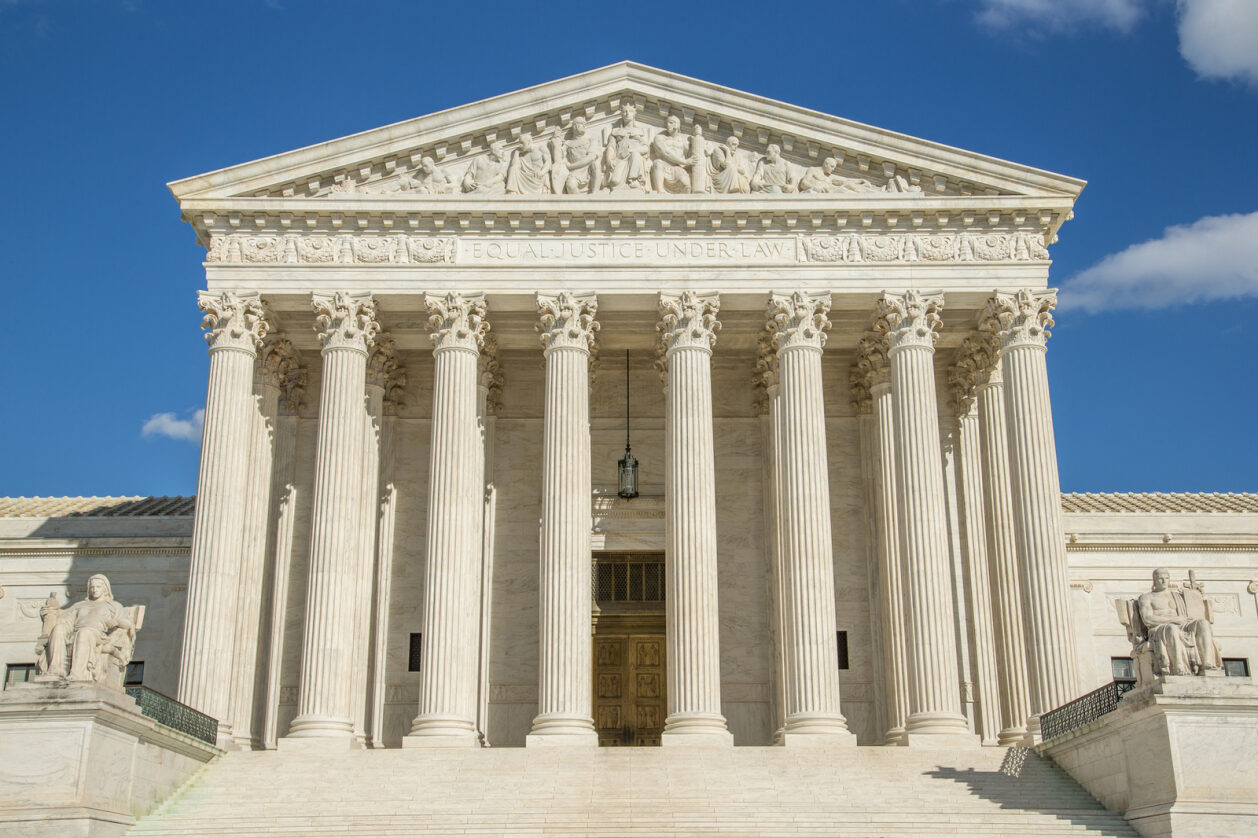
The 2025-2026 term of the U.S. Supreme Court concluded on June 30, 2026, with several rulings that have implications for small business owners. Although this term featured fewer landmark cases than in previous years, the National Federation of Independent Business (NFIB) participated in five significant cases that addressed issues ranging from property owner rights to the regulation of the shipping industry.
What Happened
Throughout the term, NFIB’s Legal Center actively advocated for small business interests in various cases. One notable case was Enbridge Energy, LP v. Nessel, where NFIB supported an amicus brief arguing for limited extensions to move cases from state to federal court. The Supreme Court ultimately ruled that such extensions are not permitted under the statute.
In Pung v. Isabella County, NFIB contended that property owners should receive the difference between their property’s fair market value and the taxes owed. The Court agreed, stating that governments must pay the surplus from property sales, even if sold below market value.
Another critical case was Flowers Foods, Inc. v. Brock, which involved the Federal Arbitration Act (FAA). NFIB argued that only workers directly involved in transporting goods across state lines should be exempt from arbitration. However, the Supreme Court expanded this exemption to include workers who sell and distribute goods within a single state.
In Montgomery v. Caribe Transport II, LLC, NFIB filed a brief asserting that allowing state tort suits against freight brokers for negligent hiring would impose significant costs on the shipping industry. The Supreme Court ruled differently, permitting a patchwork of state laws to regulate the industry.
Lastly, in cases concerning the Federal Communications Commission (FCC) v. AT&T and Verizon v. FCC, NFIB argued for the necessity of a jury trial in FCC enforcement proceedings. The Supreme Court decided that the FCC’s internal processes were adequate, thus not requiring a jury trial.
Why It Matters for Business Owners
The outcomes of these cases highlight ongoing challenges for small business owners regarding legal protections and regulatory frameworks. The decisions can affect how businesses operate, particularly in areas like property rights and arbitration processes. For instance, the ruling on property sales ensures that owners are compensated fairly, which is crucial for maintaining financial stability.
Moreover, the expansion of arbitration exemptions may complicate dispute resolution for many businesses, potentially leading to increased litigation costs. The ruling on freight broker liability could also create a more fragmented regulatory environment, making compliance more challenging for businesses operating across state lines.
What Business Owners Should Do Next
Small business owners should stay informed about these legal developments and consider how they might impact their operations. Engaging with legal resources, such as those provided by the NFIB Legal Center, can help navigate these complexities. Business owners may also want to consult with legal professionals to understand their rights and obligations under the new rulings.
Additionally, participating in advocacy efforts can help ensure that the interests of small businesses are represented in future legal discussions and decisions. Staying connected with organizations like NFIB can provide valuable insights and support in addressing these challenges.
Bottom Line
Understanding the implications of recent Supreme Court decisions is essential for small business owners. By staying informed and proactive, entrepreneurs can better navigate the evolving legal landscape and protect their interests.
Have a business tip or success story? Contact [email protected]