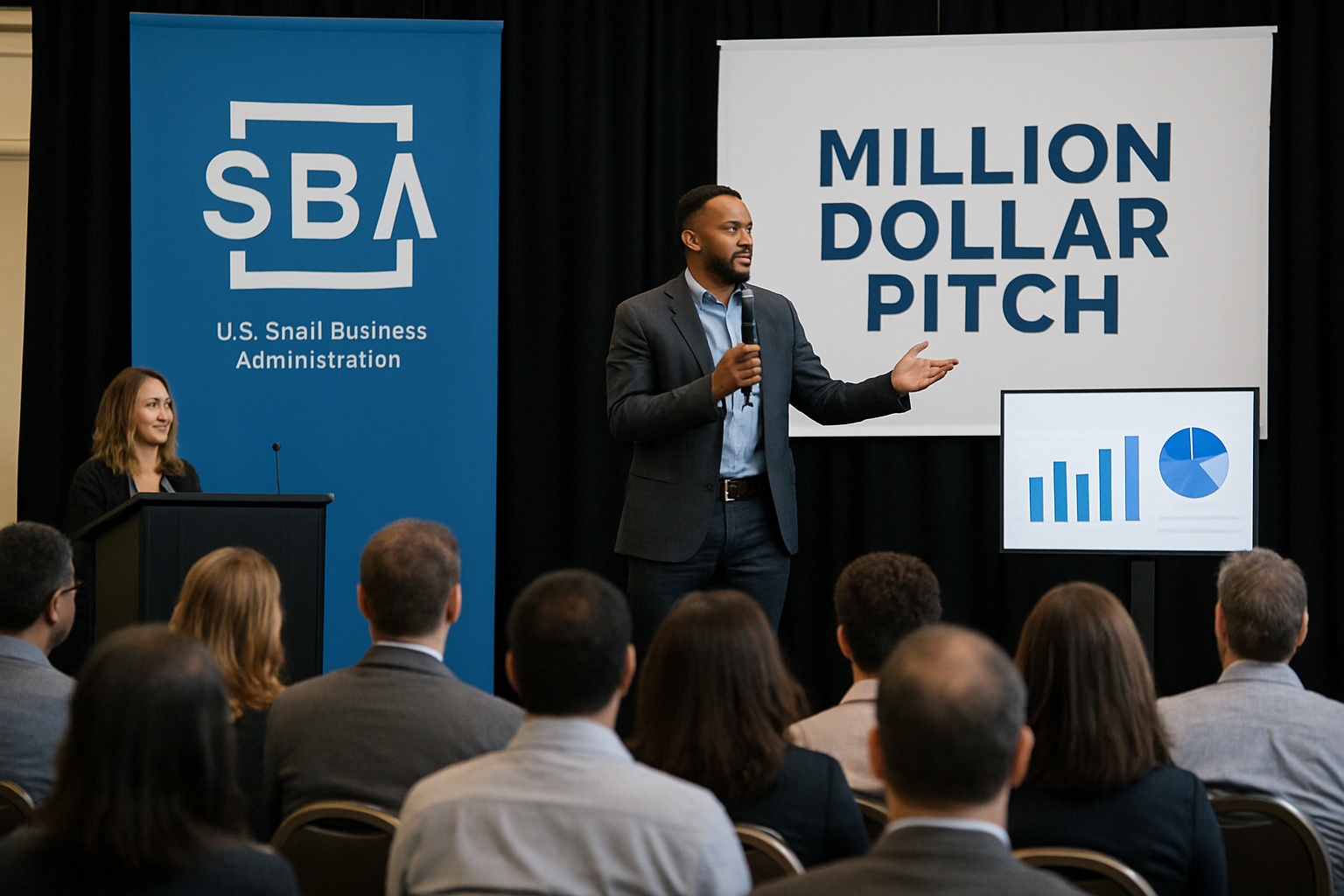
The SBA’s Washington expo and Million Dollar Pitch Competition can help small businesses win customers, partners, and non-dilutive funding if they prepare like a sales event, not just a stage appearance.
Why this SBA event matters for small businesses
The SBA says it will stage a Small Business Expo in Washington, D.C. on Friday, September 18, 2026, alongside the Million Dollar Pitch Competition as part of its Freedom 250 initiative marking America’s 250th anniversary. For founders, the practical value is not just the headline prize pool. The agency says five entrepreneurs were selected from 1,182 businesses across all 50 states to compete for five prizes totaling $1 million in growth capital, funded by Clover Network, Inc. That makes the event a real funding opportunity for the finalists, and a useful signal for everyone else that SBA-branded pitch programs can be a path to non-dilutive capital.
The SBA also says the expo will bring together entrepreneurs, business leaders, and major names in business and entertainment. That matters because events like this can function as deal rooms: places to meet prospects, referral partners, potential collaborators, and people who can open doors to capital or distribution. The research brief also notes that credentialed media access is limited and requires advance RSVP, which suggests the event will be capacity constrained and that visibility may be concentrated among attendees and approved participants.
How founders can use the expo as a lead-gen event
Small-business owners should treat an SBA expo as a customer-acquisition opportunity first and a networking event second. If you attend, go in with a short offer, a clear target customer, and a simple way to follow up. The goal is to leave with conversations that can turn into sales, partnerships, or introductions after the event. For service businesses, that might mean meeting local operators who need bookkeeping, marketing, IT, compliance, logistics, or staffing help. For product businesses, it may mean finding retailers, channel partners, or buyers who can test or place orders.
The strongest use case is to build a list of qualified contacts before you leave the room. Because the SBA says the expo is bringing together entrepreneurs and business leaders, attendees should be ready to explain what they sell, who they serve, and what problem they solve in one sentence. A founder who can quickly show proof of demand, pricing, and a clear next step is more likely to convert a conversation into revenue than someone who shows up only to collect business cards.
What the pitch competition signals about funding strategy
The Million Dollar Pitch Competition is especially relevant for founders seeking growth capital without giving up equity. The SBA says the five finalists were chosen from 1,182 businesses, which shows the selection process is competitive. That means the opportunity is not just about having a good idea; it is about presenting a business case that is specific, credible, and easy to understand. Founders preparing for similar competitions should be ready to explain the customer, the revenue model, the use of funds, and the measurable result the capital would unlock.
Even businesses that are not selected can use the same preparation process to sharpen their fundraising materials. A tight pitch deck, a clear one-minute explanation, and a concise use-of-funds plan can help with grants, lender conversations, supplier negotiations, and investor outreach. The SBA’s framing of the competition as growth capital also reinforces a useful point for small businesses: funding is easier to pursue when it is tied to a concrete growth plan, not a vague request for money.
What to watch next if you sell to government or regulated buyers
The research brief also points to a separate September 10, 2026 SBA notice saying the agency is prioritizing 8(a) processing for defense-critical firms and temporarily returning pending applications for updates. That is a different program, but it matters for firms in federal contracting and supply-chain categories because SBA process changes can create near-term openings for businesses positioned to serve government buyers. For owners in those sectors, the broader message is to stay close to SBA notices, because program timing and eligibility shifts can affect access to contracts, certifications, and capital.
For most readers, the immediate takeaway is simpler: SBA events are not just public relations moments. They can be practical channels for lead generation, partnership building, and funding preparation. If you can attend, arrive with a sales goal, a follow-up plan, and a pitch that shows exactly how capital would translate into growth.