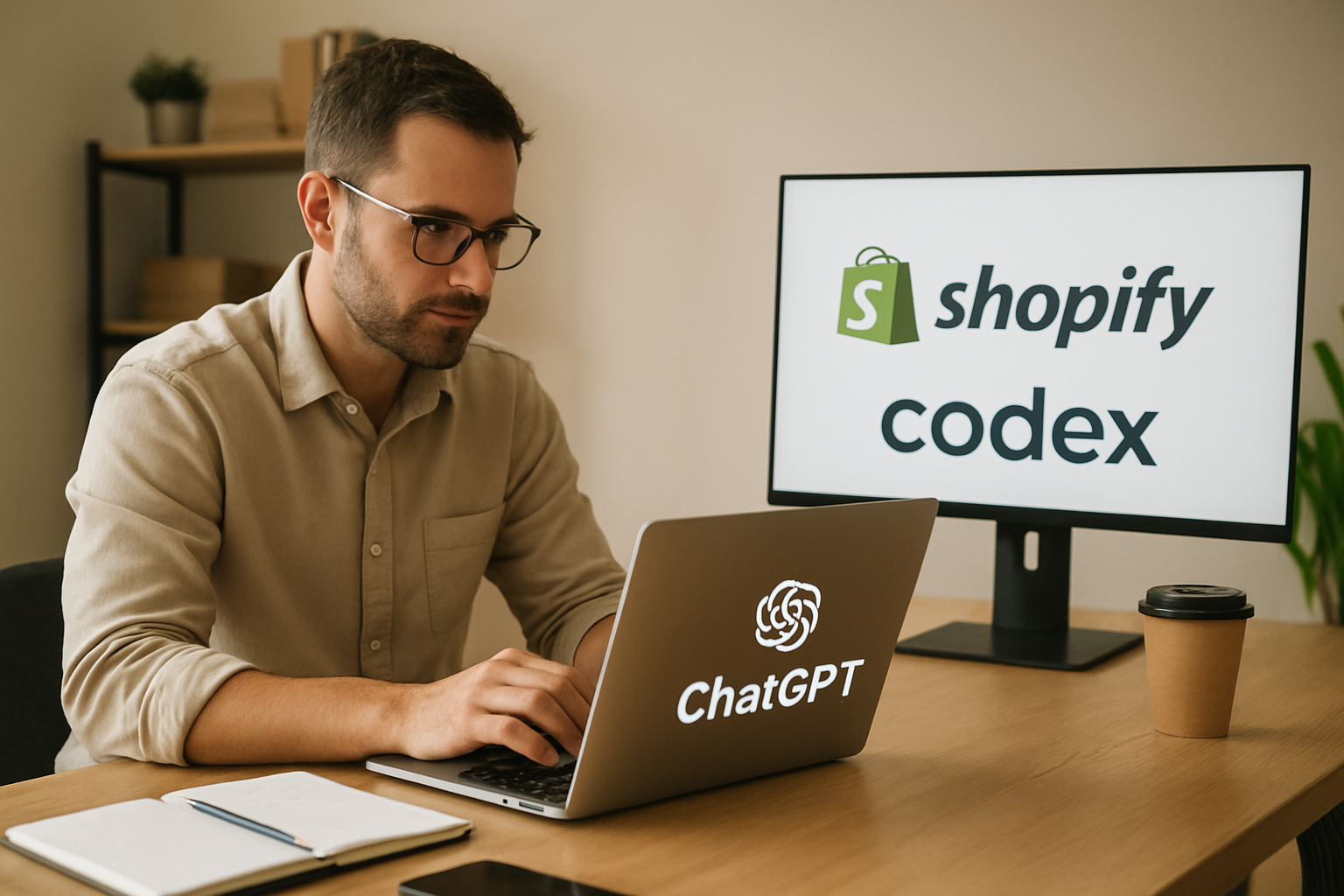
The new program pairs training, replays, and templates with Shopify and Codex use cases that can help lean teams automate work without hiring.
Why this matters for small businesses
OpenAI’s new small-business program is less about a product launch than a usable adoption path for owners who need to do more with fewer people. According to OpenAI, the program is built around hands-on virtual training, in-person Academy events, short guides, videos, and partner offerings from tools including Shopify, Intuit, Slack, Atlassian, Dropbox, and Wix. The practical value is straightforward: the company is positioning ChatGPT as a way for lean teams to handle work that often gets split across a marketer, accountant, salesperson, operator, and strategist.
That framing matters because it points to immediate business utility, not abstract AI hype. OpenAI says the program is designed to help small businesses integrate with the tools they already use and use agents to finish work more accurately and efficiently. For owners trying to avoid another hire, that can translate into faster content production, lighter admin load, and better internal workflows.
What OpenAI is actually offering
The verified source material shows the program is active, not just announced. OpenAI Academy’s small-business community lists live and recent events, including a Houston in-person session on September 21, 2026, a Shopify and Codex livestream on September 2, 2026, and a San Jose in-person session on August 27, 2026. The same page also surfaces reusable resources such as a Builder Bootcamp: RAG recording, an SME AI Accelerator virtual replay, and a “Four GPT templates for small businesses” resource.
For small-business owners, the templates and replays are the most immediately useful pieces because they reduce setup friction. Instead of starting from scratch, a business can borrow a prompt structure or workflow pattern and adapt it to customer support, marketing, training, or operations. OpenAI also says ChatGPT Work and GPT-5.6 are available to small businesses today, and that it wants owners to join events, sign up for updates, and provide feedback that will shape the product roadmap.
Where the cost savings and revenue upside are
OpenAI’s own examples point to tasks that can replace or reduce outsourced work. The company highlights workflows such as turning a free-form voice note into a Slack note, tracking market mentions, competitor performance, and product trends in a live site, evaluating inventory for product or campaign ideas, and using customer reviews to build a training presentation or improve service. Those are not flashy demos; they are the kinds of repetitive tasks that consume hours in a small business.
That makes the opportunity layer clear. A solo operator can use these workflows to save time on internal admin. A retailer can use inventory analysis to spot campaign ideas faster. A service business can turn customer feedback into training material without paying for a separate research or documentation process. A founder can use the Shopify and Codex event content to look for storefront automation ideas that reduce manual updates and improve speed to launch.
Best use case for BizTipper readers
The strongest takeaway is that OpenAI is packaging AI adoption as a practical training funnel for small businesses, not just a software feature set. The combination of events, replays, templates, and partner workflows gives owners a low-friction way to test AI in real work before committing to larger process changes. That is especially relevant for businesses that need to improve marketing, ecommerce operations, customer support, or internal documentation without adding staff.
For BizTipper readers, the immediate move is to treat the Academy resources as a working playbook: use the templates, watch the replays, and map one repetitive task that can be automated or shortened this month. The verified materials suggest OpenAI is actively building around that use case, and the practical upside is time saved, fewer outsourced tasks, and a faster path to using AI in day-to-day operations.