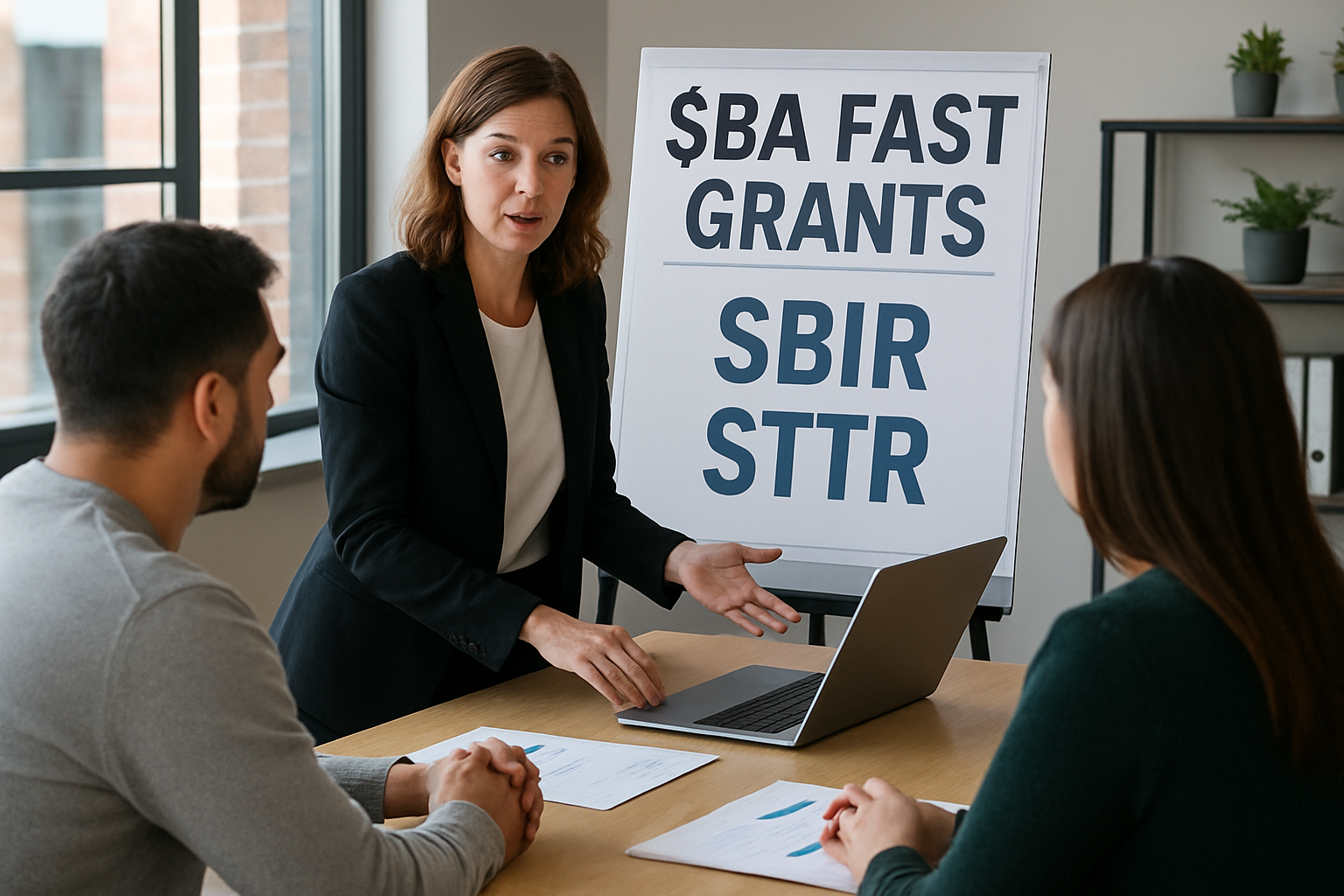
New FAST awards fund local organizations that help startups find topic matches, strengthen proposals, and pursue non-dilutive R&D capital.
Why this matters for small startups
For founders chasing non-dilutive funding, the SBA’s latest FAST awards are less about the grant recipients themselves than the support layer they create around America’s Seed Fund. On September 22, 2026, the SBA said it awarded more than $8 million to 50 organizations through the Federal and State Technology Partnership Program, with individual awards of up to $180,000 and a 12-month base period beginning September 30. The practical value for small businesses is local help: FAST funds organizations that provide outreach, training, mentoring, and proposal assistance for SBIR and STTR applicants.
That matters because SBIR and STTR are the federal government’s main early-stage, non-dilutive R&D funding pathways for technology startups. According to the SBA’s current guidance in the research brief, America’s Seed Fund provides over $4 billion each year, and participating agencies issue topic areas tied to their research and development needs. For startups that want to keep equity intact while funding product development, the FAST network is a way to improve the odds of getting into the pipeline.
Where founders can find help
The SBA says FAST awardees now provide support across 49 states and Puerto Rico, which is important for founders outside major technology hubs. The 2026 cohort includes 43 returning awardees and seven new entities. The list spans state agencies, universities, and regional innovation groups such as the Arizona Commerce Authority, TEDCO in Maryland, LaunchTN in Tennessee, the South Carolina Research Authority, the Puerto Rico Science, Technology & Research Trust, and the Ben Franklin Technology Partners Corporation in Pennsylvania.
For a small business owner, the key takeaway is that SBIR/STTR should not be treated as a purely federal-portal process. The SBA’s FAST network is meant to connect innovators to person-to-person guidance, local training, and technical assistance that can help with topic fit, proposal quality, commercialization planning, and readiness for later phases. The research brief also points founders to the SBA local resources locator and FAST partners as the starting point for finding state or regional support.
How to use FAST to pursue America’s Seed Fund
The most useful path is straightforward: identify a FAST-supported local partner, then work backward from the federal agency topics that match your technology. The SBA says FAST awardee organizations help small businesses identify relevant opportunities, develop competitive applications, and navigate the path from research to commercialization. That makes the network especially useful for technical founders who have a strong product idea but need help translating it into a federal proposal.
The SBA’s guidance also highlights why this support can be commercially valuable. America’s Seed Fund is described as non-dilutive, meaning the agency does not take equity or ownership. The research brief says the government also protects data rights and the possibility of sole-source phase III contracts. For startups, that combination can reduce financing pressure while preserving control of the business and its intellectual property.
What to watch before applying
The main caution is that FAST money does not go directly to startups. The grants go to intermediary organizations, so founders need to engage those local providers rather than expecting a direct check. That distinction matters for planning: the opportunity is access to grant-funded expertise, not a startup grant program in the usual sense.
The SBA also said the awards follow reauthorization of SBIR and STTR through September 30, 2031, and that the legislation strengthens program integrity, accountability, and protections for sensitive intellectual property. For founders, the immediate business question is simpler: if your technology fits a federal R&D topic, the FAST network may be the fastest way to get help shaping a stronger application and moving toward non-dilutive capital.