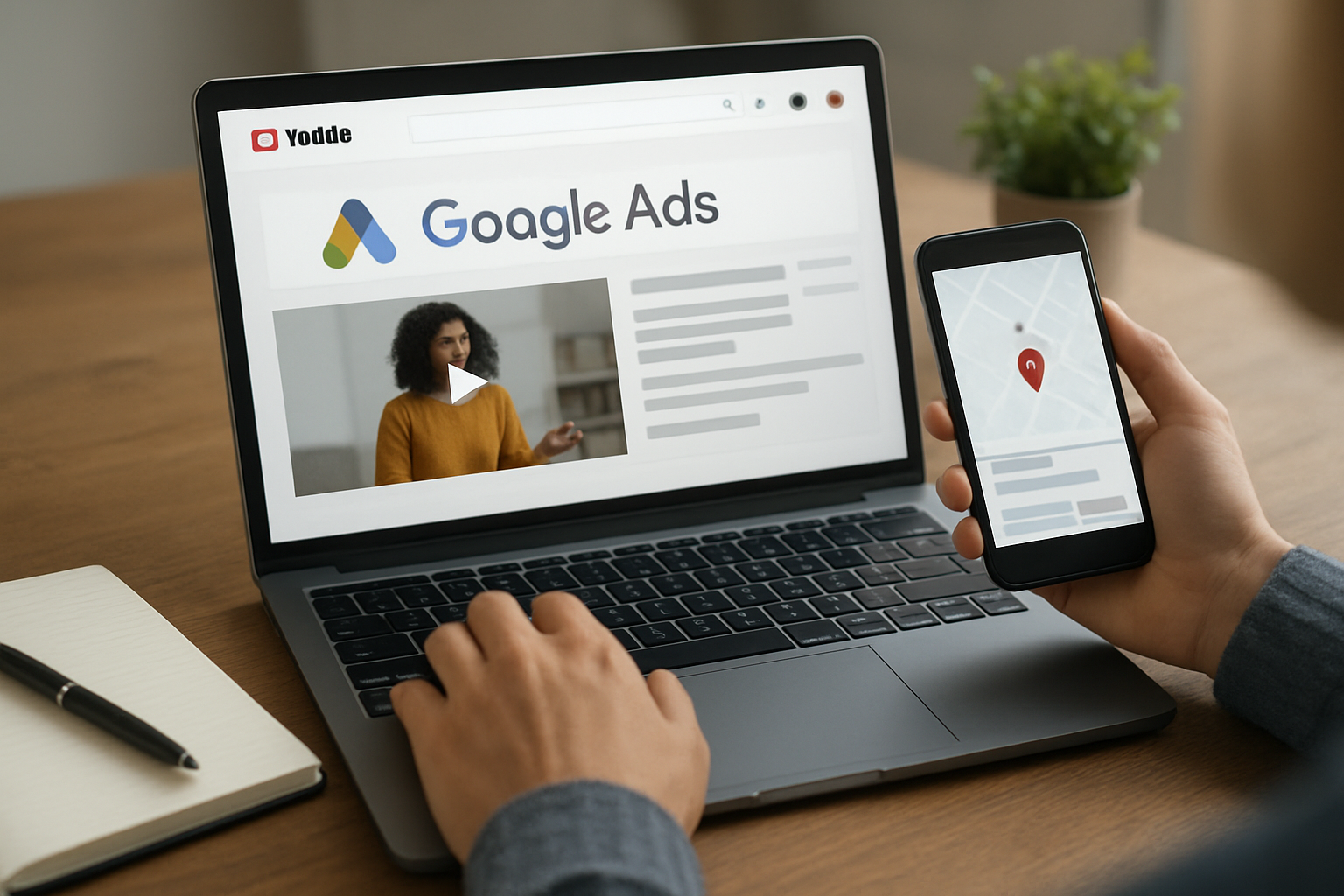
New YouTube, Gmail and Maps ad features could help small businesses answer questions faster, reduce friction and capture local demand before holiday traffic spikes.
Small businesses running holiday campaigns should pay attention to Google’s September Demand Gen update because it is aimed at one thing that often kills conversions: friction. Google says the new features are designed to help advertisers engage and convert audiences faster across YouTube and other visual surfaces, with three changes that matter for sellers, local businesses and service brands.
Three features that can shorten the path to purchase
The biggest change is Business Agent for YouTube Ads. According to Google, viewers can interact with conversational AI alongside video ads that include product feeds and get immediate answers about products or brands without leaving the viewing context. For a small business, that matters because holiday shoppers often hesitate over basic questions such as fit, availability, use cases or shipping. If the ad can answer those questions in the moment, the business may lose fewer prospects to the back button.
Google also introduced one-tap experiences for image ads on YouTube Shorts and Gmail. On Shorts, the feature works with 9:16 full-bleed image ads, and Google says Gmail is already a strong performer in Demand Gen. In Google’s own internal global Gmail Ads data from February 2026, advertisers adding Gmail to Demand Gen campaigns saw image creatives achieve a 40% increase in conversions at the same ROI. That is Google’s figure, not an independent benchmark, but it signals why Gmail deserves a closer look for businesses that rely on visual offers and direct response campaigns.
The third update is Affiliate Location Extensions in Google Maps. Google says retail networks and dealerships can capture local demand through Promoted pins as people browse, search and navigate in Maps. The verified research brief also says Google Maps advertising can appear as Promoted pins when location assets or Google Business Profile links are in place. For businesses with storefronts, showrooms or service locations, that can turn Maps into a more direct path from discovery to visit.
Why this matters for small businesses now
The practical value is not that Google added another ad feature. It is that the new setup reduces the number of steps between attention and action. That can matter most during holiday traffic spikes, when shoppers compare options quickly and abandon ads that ask them to do too much work. Faster product Q&A, one-tap landing-page visits and local pins in Maps all aim to keep the customer moving.
This is especially relevant for e-commerce catalogs, local retail, dealerships, service-area businesses and any advertiser trying to reduce abandonment. A catalog seller can use the YouTube conversational layer to handle common objections. A local business can use Maps visibility to catch nearby demand. A service brand can use Shorts or Gmail to send people to a landing page with less friction than a traditional multi-step ad path.
What small businesses should check before testing it
These features are not plug-and-play for every account. Google’s verified materials say they depend on eligible campaign setup, compliant assets, linked location data and Google policy approval. The research brief also notes that Google Maps inventory is not exclusive to Maps, so businesses should not assume every pin or placement is the same as a dedicated Maps-only campaign.
That means the best use case is a focused test, not a full account overhaul. Businesses with product feeds, strong location data or a clear holiday offer are best positioned to test whether the lower-friction paths improve conversion. If the setup is right, the update could help small advertisers spend less effort pushing people to the site and more effort converting them once they arrive.