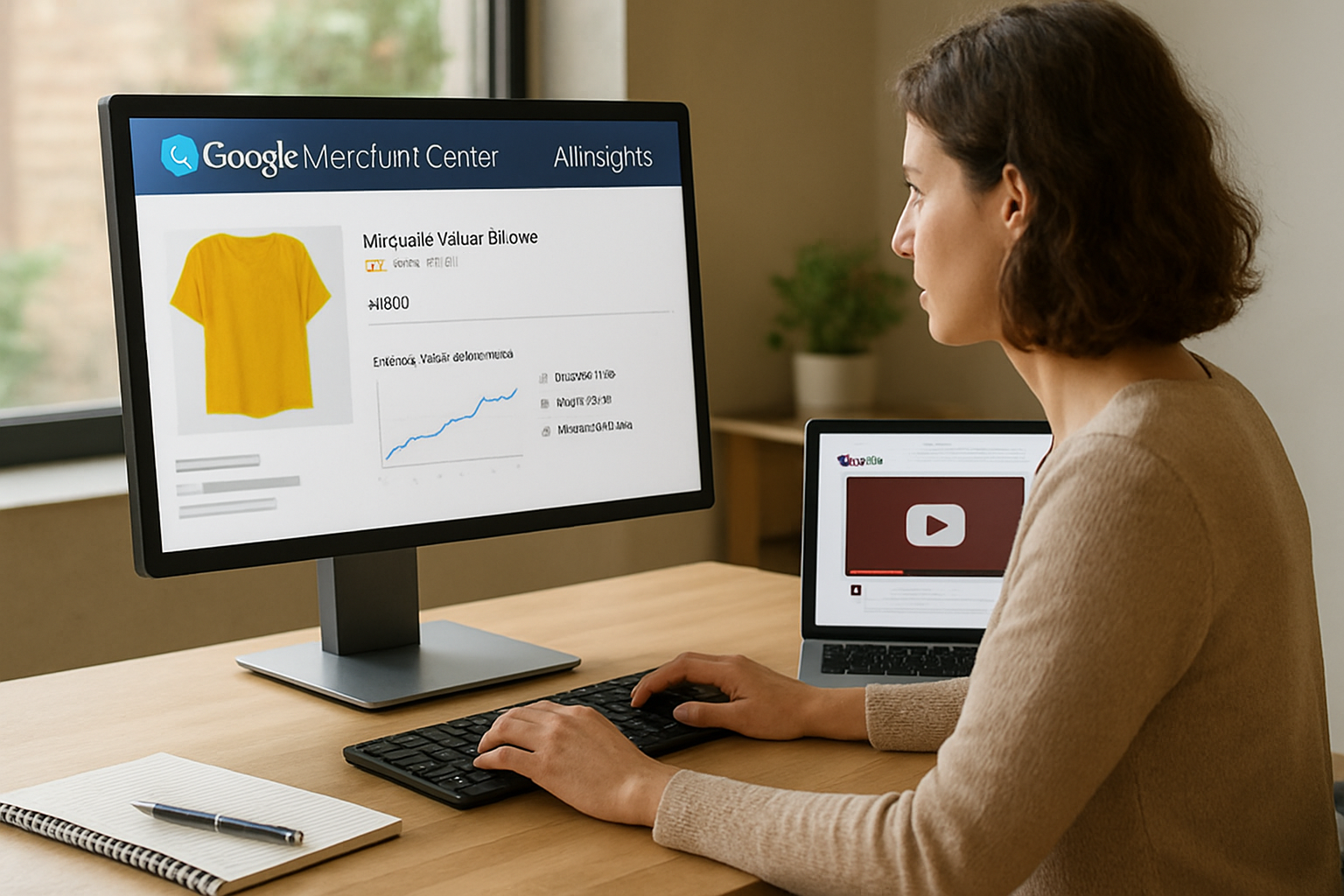
Merchant Center’s AI insights, YouTube ad Business Agent beta, and UCP checkout updates give small retailers a practical holiday playbook for discovery and conversion.
Holiday sales now depend on feed quality, not just ad spend
Google’s latest shopping updates point to a simple advantage for small retailers: the businesses that keep product data clean, complete, and conversational are better positioned to show up in AI-assisted shopping journeys. In a Sept. 16, 2026 post, Google said it is making AI performance insights generally available in Merchant Center for businesses in Australia, Canada, India, New Zealand, and the U.S., while also inviting U.S. retailers to a beta for Business Agent in YouTube ads and expanding Universal Commerce Protocol checkout capabilities.
For BizTipper readers, the practical takeaway is not “Google has new AI.” It is that product-feed hygiene has become a revenue lever. Google says merchants adopting core Merchant Center feed best practices see a 5% average increase in conversions the following month. That makes the update relevant to any retailer trying to win holiday traffic without hiring more staff or increasing support load.
What the Merchant Center AI report can tell you
Google says the new AI performance insights show how shoppers discover brands across conversational surfaces and compare a merchant’s share of voice with competitors across AI Mode and AI Overviews. The verified research brief adds that the report is updated daily with a few days of lag and is meant to help merchants see where a product is weak in discovery, evaluation, or ready-to-buy stages.
That matters because it gives small businesses a concrete diagnostic tool. If a product is not surfacing well in AI-driven discovery, the fix may not be a bigger budget; it may be missing attributes, weak titles, thin descriptions, or incomplete product data. Google’s own guidance recommends adding relevant search terms and missing attributes. For a small retailer, that means starting with top-selling items and repairing the listings most likely to drive holiday revenue.
Use conversational attributes, loyalty data, and video where they fit
Google says merchants can improve discoverability by keeping feeds accurate and adding conversational attributes and loyalty data. The research brief points to specific fields in Google’s product-data docs, including video_link for shoppable video assets, question_and_answer for conversational product context, and loyalty_program for member pricing and perks.
The business case is straightforward. Google says conversational attributes from lululemon were incorporated 50% of the time in relevant product recommendations in AI Mode during testing. Google also says Minted used loyalty data to surface member pricing in search results. For a small retailer with a membership program, free-shipping perk, or repeat-customer discount, that can help turn signed-in shoppers into higher-value buyers. If you already have product demo clips or short-form video, the video_link field may also help power more visual, shoppable ad formats.
YouTube ads and UCP could reduce support work during peak season
Google is also inviting eligible U.S. retailers to the Business Agent for YouTube ads beta. According to Google, the agent embeds directly within YouTube ads so viewers can ask complex product questions and get tailored guidance without leaving YouTube. For a small team, that could reduce repetitive pre-sale questions during the holiday rush and keep shoppers moving toward purchase.
On the checkout side, Google says it is expanding Universal Commerce Protocol integration capabilities in Merchant Center. The updated tools include cart transfer to a merchant site and enhanced checkout flow testing, with more analytics coming later. Google says UCP already enables direct checkout for hundreds of thousands of brands and retailers across Google. The rollout is currently in the U.S., with Australia and Canada to follow early next year.
The opportunity here is operational as much as commercial. If a retailer can simplify checkout or reduce friction between discovery and purchase, it may improve conversion without rebuilding its commerce stack from scratch. That is especially useful for small businesses that do not have a dedicated engineering team.
A practical holiday checklist for small retailers
The most useful response is to treat these updates as a short holiday sprint: open Merchant Center’s AI performance tab, compare share of voice, and identify products that need better titles or missing attributes. Then add conversational details to your best sellers, attach loyalty fields if you have a member program, and test video links where you already have usable assets. If you are eligible for the U.S. YouTube ads beta, it may be worth applying to offload some pre-sale support. If checkout friction is costing sales, review whether UCP can help streamline the path to purchase.
The risk is also clear. Google’s new surfaces make data quality more important than ad spend alone. Retailers with stale feeds, weak product descriptions, or no structured loyalty and video data may be less visible in AI-assisted shopping journeys. For small businesses, that makes this less of a headline about Google and more of a reminder that better product data can now function like a growth channel.